
Piles (Haemorrhoids) Surgery in Singapore
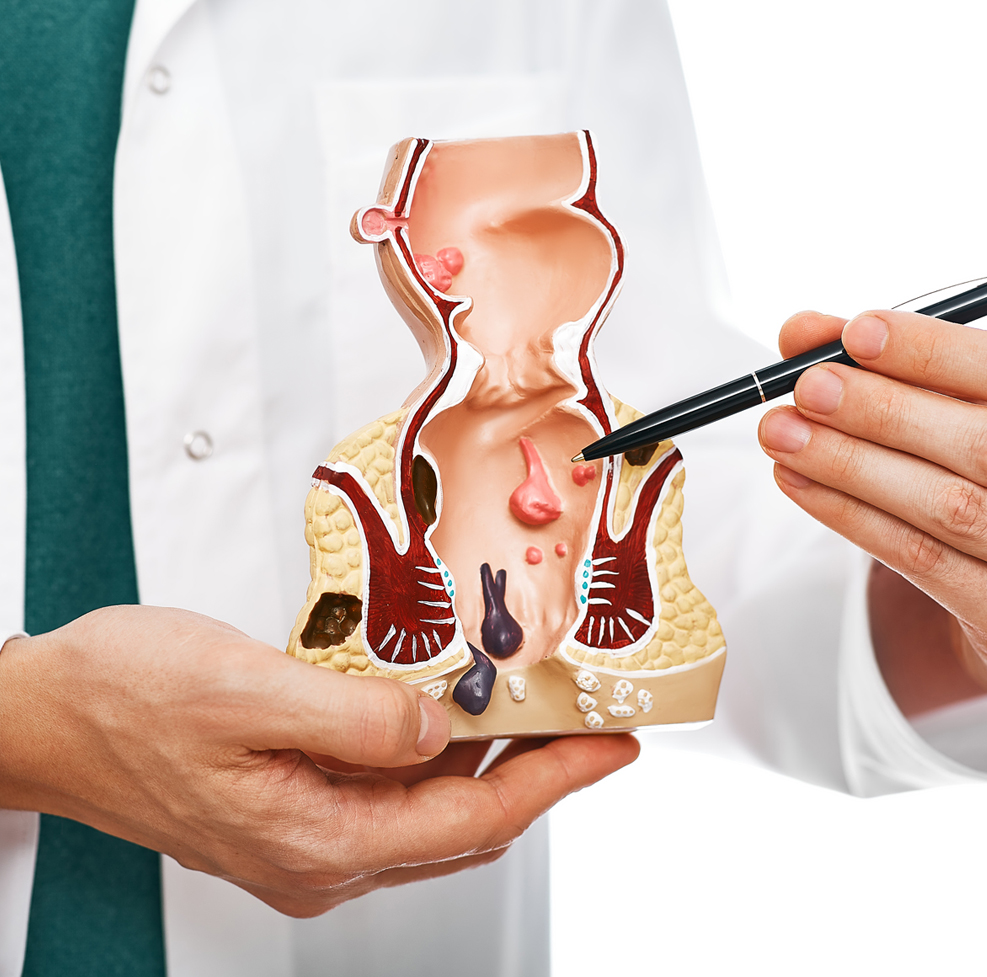

Haemorrhoids, commonly known as piles, are a common condition that affect the blood vessels in and around the anus. They can cause symptoms such as rectal bleeding, itching, discomfort and swelling, which may interfere with daily activities and quality of life.
While many cases can be managed with lifestyle changes and non-surgical treatment, persistent or more severe symptoms may require further medical assessment.
What Are Piles or Haemorrhoids?
Haemorrhoids are swollen blood vessels in or around the anus and lower rectum. They develop when increased pressure causes the supporting tissues and blood vessels in this area to enlarge and stretch.
Common contributing factors include straining during bowel movements, chronic constipation, prolonged sitting on the toilet, pregnancy and obesity. Over time, the supporting tissues can weaken, causing the haemorrhoids to enlarge or protrude outside the anal canal.
Who Is Most Likely to Develop Piles?
Haemorrhoids can affect people of all ages, but certain groups may have a higher risk of developing the condition, including:
- Adults aged 45 to 65 years
- Pregnant women
- Individuals who are overweight or obese
- People with a family history of haemorrhoids
- Those with chronic constipation or diarrhoea
- Individuals who frequently perform heavy lifting
- People who spend prolonged periods sitting
What Are the Causes of Piles or Haemorrhoids?
Haemorrhoids develop when pressure within the veins of the rectum and anus increases. Several factors may contribute to this pressure, including:
- Excessive straining during bowel movements
- Regularly lifting heavy weights
- Chronic constipation or diarrhoea
- Pregnancy
- Obesity
- Sitting for prolonged periods
- Having a low-fibre diet
What Are the Common Signs and Symptoms of Piles?
Signs and symptoms vary depending on the type and grade of piles.
Internal Haemorrhoids
Internal haemorrhoids develop inside the rectum and may not cause noticeable discomfort initially. Common symptoms include:
- Painless rectal bleeding during bowel movements
- Mucus discharge
- A feeling of incomplete bowel emptying
- Prolapse, where the haemorrhoid protrudes through the anus
When prolapsed haemorrhoids become difficult to push back inside, further treatment or surgery may be considered
External Haemorrhoids
External haemorrhoids develop beneath the skin around the anus and are often more noticeable.
Symptoms may include:
- Pain or discomfort around the anus
- Itching or irritation
- Swelling
- Rectal bleeding
- A lump near the anus
If a blood clot develops within the haemorrhoid, symptoms may become more severe and require medical attention.
What Are the Different Types of Piles?
Haemorrhoids can be classified into 3 main types:
Internal Haemorrhoids
: Internal haemorrhoids develop inside the rectum above the dentate line. They can vary in size and are often characterised by bleeding during bowel movements. However, it does not usually cause discomfort or pain unless it has prolapsed and develops a blood clot (thrombosis).Prolapsed Haemorrhoids
: Prolapsed haemorrhoids are internal haemorrhoids that have already prolapsed (protruded) from the rectum. This causes pain and discomfort when sitting or during bowel movements. Piles surgery in Singapore may be recommended to remove the haemorrhoid if it bleeds a lot, and causes pain and discomfort.External Haemorrhoids
: External haemorrhoids happens just under the skin around the anus. Patients diagnosed with external haemorrhoids typically experience itching and bleeding, and may also feel a firm lump near the anus. External haemorrhoids can become painful if they form a clot called a thrombus, and might then need to be assessed by a haemorrhoid surgeon.
What Are the Different Grades of Piles?
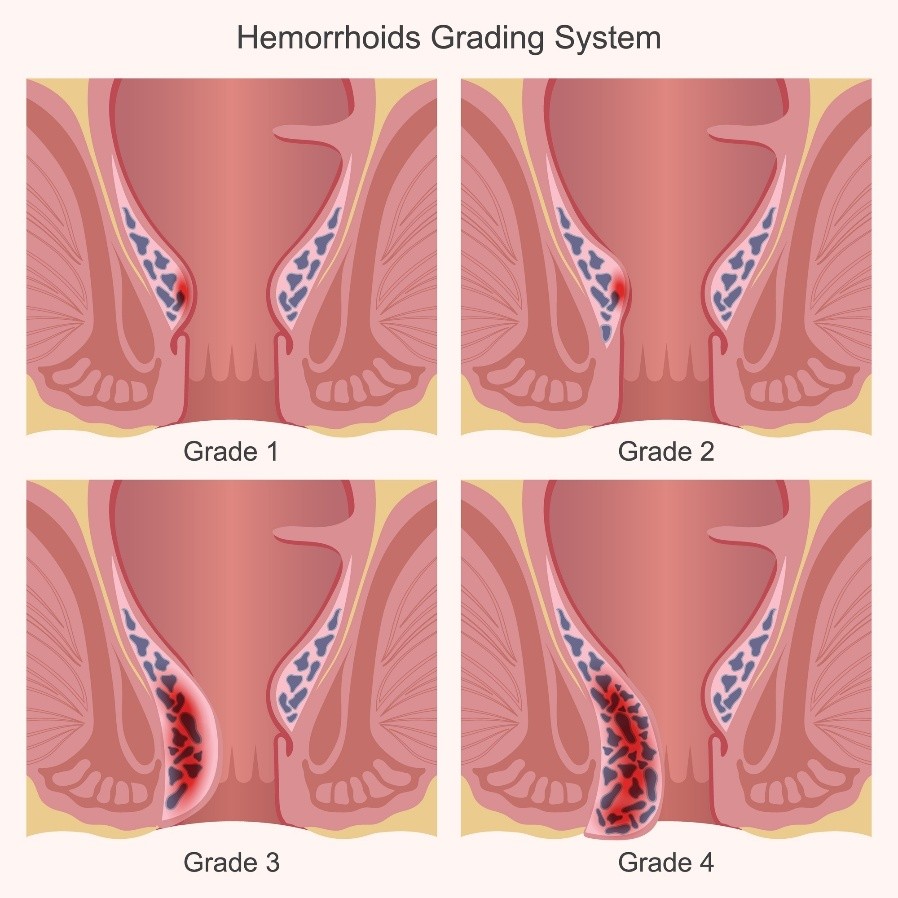
Piles can happen both inside and outside the anus. They are divided into 4 grades based on their size and symptoms:
Grade I
: Enlarged internal piles that usually present with bleeding during defecation. These can be easily treated with medication.Grade II
: These larger piles tend to protrude out during straining at stools but are able to spontaneously return back into the anal canal after bowel movement.Grade III
: These large piles protrude during defecation causing significant bleeding and remain outside the anus. Some finger pressure may be able to push it back inside the anus.Grade IV
: These piles are persistently outside the anus and the blood in these engorged vessels is usually clotted, leading to extremely painful and swollen lumps that require surgery to achieve relief.
What Are the Possible Complications of Untreated Piles?
While most piles cause minimal discomfort and often resolve on their own, several complications can still possibly occur, including:
- Anaemia: Chronic blood loss from haemorrhoids can lead to anaemia over time. This condition occurs when the body does not have enough red blood cells.
- Thrombosed Haemorrhoid: This occurs when a blood clot forms within a haemorrhoid. The haemorrhoid may appear bluish due to the clot.
- Strangulated Haemorrhoid: This is a life-threatening complication where the prolapsed internal haemorrhoid becomes trapped outside the anus, cutting off its blood supply. If not treated promptly, the haemorrhoid tissue can die and cause sepsis.
How Are Piles or Haemorrhoids Diagnosed?
Diagnosing haemorrhoids usually begins with a discussion of your symptoms, bowel habits and medical history. As symptoms such as rectal bleeding, discomfort and itching can also occur in other colorectal conditions, a physical examination is often required to confirm the diagnosis and assess the severity of the haemorrhoids.
-
Visual Inspection
A visual examination allows the doctor to assess the area around the anus for signs of external haemorrhoids, swelling, skin tags or other abnormalities that may be contributing to your symptoms. -
Digital Rectal Examination (DRE)
During a digital rectal examination, the doctor gently inserts a gloved and lubricated finger into the rectum to check for abnormalities within the anal canal and lower rectum. This examination may help identify internal haemorrhoids and rule out other possible causes of symptoms.
Piles (Haemorrhoids) Treatment in Singapore
While mild haemorrhoids may respond to conservative measures, larger or more symptomatic haemorrhoids may require procedural or surgical treatment.
-
Non-Surgical Treatment
Mild haemorrhoids may improve with dietary modifications, increased fibre and fluid intake, stool softeners and medications that help relieve discomfort, itching and inflammation. These measures may also help reduce straining during bowel movements and prevent symptoms from recurring. -
Minimally Invasive Procedures
Minimally invasive procedures may be recommended when symptoms persist despite conservative treatment but surgery is not yet required.-
Rubber-Band Ligation
Rubber band ligation is a commonly performed outpatient procedure used to treat internal haemorrhoids. A small rubber band is placed around the base of the haemorrhoid to cut off its blood supply. The haemorrhoid gradually shrinks and typically falls away within several days during normal bowel movements.
-
-
Piles Surgery
Surgery may be recommended for larger haemorrhoids, prolapsing haemorrhoids or symptoms that continue despite other forms of treatment.-
Conventional Haemorrhoidectomy
Conventional haemorrhoidectomy involves the surgical removal of haemorrhoidal tissue using specialised instruments that simultaneously cut tissue and control bleeding. It is commonly recommended for advanced Grade III and Grade IV haemorrhoids. -
Stapled Haemorrhoidectomy
Stapled haemorrhoidectomy repositions prolapsed haemorrhoidal tissue back into the anal canal while reducing its blood supply. A circular stapling device is used to remove a ring of tissue above the haemorrhoids, helping to lift them back into their normal position. -
Trans-Anal Haemorrhoidal De-arterialization (THD)
THD is a minimally invasive procedure that uses Doppler ultrasound guidance to identify and tie off the arteries supplying blood to the haemorrhoids. By reducing blood flow, the haemorrhoids gradually shrink over time. As no tissue is removed, postoperative discomfort is generally reduced compared to some traditional surgical techniques. -
Laser Haemorrhoidoplasty
Laser haemorrhoidoplasty uses laser energy to shrink haemorrhoidal tissue from within while preserving surrounding tissue. This technique may result in less tissue trauma and a shorter recovery period for suitable patients. -
Ligsasure/Harmonic Haemorrhoidectomy
These techniques use advanced energy devices to remove haemorrhoidal tissue while sealing blood vessels during the procedure. This may help reduce bleeding and improve surgical precision during haemorrhoid removal.
-
What Are the Risks of Haemorrhoid Surgery?
As with any surgical procedure, haemorrhoid surgery carries potential risks and complications. Your surgeon will discuss these with you before treatment.
-
Bleeding
A small amount of bleeding following surgery is common and usually settles during the recovery period. Significant bleeding is uncommon but may occasionally require medical attention. -
Infection
Infection may develop around the surgical site, although this is relatively uncommon. Symptoms may include increasing pain, swelling, redness or discharge. -
Pain and Discomfort
Some discomfort is expected following haemorrhoid surgery, particularly during bowel movements. Symptoms usually improve as healing progresses and can be managed with medication. -
Anal Stenosis
Anal stenosis refers to narrowing of the anal canal due to scarring during healing. This is an uncommon complication that may require further treatment if symptoms occur.
Post Surgery Care After Piles Treatment
Following your doctor's postoperative instructions can help support healing and recovery.
-
Pain Management
Pain medication may be prescribed to help manage discomfort during the recovery period. Taking medication as directed can help improve comfort during daily activities and bowel movements. -
Activity
Light activities can usually be resumed within a few days, although strenuous exercise and heavy lifting should be avoided until advised otherwise by your doctor. -
Lifestyle Changes
Maintaining a high-fibre diet, drinking sufficient fluids and avoiding excessive straining may help reduce the risk of recurrence. -
Follow-Up Checks
Follow-up appointments allow your surgeon to monitor healing, assess recovery progress and address any concerns. -
Bowel Management
Preventing constipation is an important part of recovery. Dietary adjustments, hydration and stool softeners may be recommended where appropriate. -
Hygiene
Keeping the anal area clean and dry may help reduce irritation and support healing after treatment.
When Should You See a Piles Surgeon?
Call us today at +65 6433 1005 to schedule an appointment and let us discuss your concerns and recommend the most suitable treatment option for you.
Why Choose our Haemorrhoid Surgery Clinic in Singapore?
At Kam Colorectal Centre in Singapore, patients receive care from Dr Kam Ming Hian, a Senior Consultant Colorectal Surgeon with over 20 years of experience managing colorectal and anal conditions. The clinic provides comprehensive assessment and treatment for haemorrhoids, ranging from conservative management and minimally invasive procedures to surgical treatment where appropriate.
Patients benefit from personalised treatment planning, clear explanations of available options and continuity of care throughout their treatment and recovery journey.
Frequently Asked Questions About Piles or Haemorrhoids
What are the methods for treating piles?
Is surgery recommended for piles?
How much does a piles surgery cost? Can MediSave be used?
How long does piles surgery take? Do I need to be hospitalised?
Is piles surgery painful? What is the recovery period like?
Can piles be prevented?
Are haemorrhoids common in Singapore?
Do haemorrhoids lead to cancer?
Can stress worsen piles?
Seeking relief from piles or recurrent haemorrhoid symptoms?
Whether you are experiencing bleeding, discomfort or prolapsing haemorrhoids, Dr Kam Ming Hian can assess your condition and recommend appropriate treatment options.
Book a consultation at 6443 1005 today.

Meet Our Piles (Haemorrhoids) Surgeon in Singapore
Dr. Kam Ming Hian
With more than two decades of experience managing colorectal conditions, our colorectal surgeon Dr Kam Ming Hian is well-known for his expertise in diagnosing and treating various haemorrhoid conditions. He is a former Director of Robotics & Minimally Invasive Surgery in the Department of Colorectal Surgery, SGH. Dr Kam has successfully treated many patients and received multiple awards for service excellence during his career.
Read More![]()
20 Years of Colorectal Experience
![]()
Skilled in Minimally Invasive & Laparoscopic Techniques
![]()
Individualised & Cost Effective Treatment for Every Patient
![]()
Medisave and Insurance-Covered Treatment and Procedures

We are proud to provide patients with highly personalised and affordable colorectal treatments in Singapore. At Kam Colorectal Centre, we’ve got your colorectal health covered.
Call +65 6443 1005 or fill in the form below to book a detailed consultation with us.